

AIR DUCT & HVAC
The Ultimate Guide to HVAC & Air Duct Cleaning for Las Vegas Homes
Desert wind, sand, and constant AC usage make Las Vegas air ducts a breeding ground for dust and allergens. Learn how to restore your home’s air quality.
Read GuideMaria H.
Master Floor Care & Restoration Specialist
Grout must be sealed because it is made of highly porous cement and sand that absorbs dirty water, spills, and bacteria like a sponge. The best technique is to apply a high-quality penetrating sealer only after the floors have been professionally deep-cleaned and completely dried. To maintain the seal, you must stop using harsh chemicals like bleach or ammonia, which eat away the protective barrier. Instead, sweep frequently to remove abrasive sand and mop only with a pH-neutral floor cleaner. In high-traffic areas, grout should be resealed every 1 to 2 years.
You finally got your tile floors looking spotless, but how do you keep them that way?
Tile is one of the most durable surfaces you can put in your home, but the grout holding it together is its weakest link. Because standard grout is incredibly porous, it acts like a magnet for dirty mop water, cooking grease, and spilled drinks. If you do not seal it properly, those bright lines will turn dark gray or black within a matter of months.
With 28 years of floor restoration experience in the Las Vegas valley, we have seen perfectly good floors ruined by improper sealing and harsh maintenance routines. Here are the 10 professional techniques you need to follow to lock out the dirt and keep your floors looking flawless.
The biggest mistakes in grout sealing happen before the bottle is even opened. If you mess up the prep work, the sealer will actually work against you.
This is the golden rule of floor care. Sealer is designed to lock things out, but it will also lock things in. If your grout has even a thin layer of dust, soap scum, or oily residue, applying sealer will permanently trap that dirt under a clear, hard shell. Always have your floors professionally extracted with high-pressure steam before applying a new coat of sealer.
Grout absorbs water deeply. After a heavy cleaning, the surface might feel dry to the touch within an hour, but the deep pores are still holding moisture. If you apply sealer too soon, you trap that moisture inside the grout, which will eventually cause the sealer to turn cloudy and peel, or even trigger mold growth underneath. Wait a full 24 hours after deep cleaning before sealing.
Not all sealers are created equal, and how you apply them determines how long they will last.
Avoid cheap "topical" sealers that simply paint a shiny, plastic-like coating over your tile and grout. These peel and flake off in high-traffic areas. Instead, insist on a penetrating sealer (also known as an impregnating sealer). This liquid absorbs deep into the pores of the grout and hardens below the surface, creating an invisible shield that blocks liquids from soaking in.
Do not use a mop to slop sealer all over the entire floor. Use a specialized applicator bottle with a rolling wheel, or a small foam brush, to paint the sealer directly onto the grout lines. This ensures the grout gets fully saturated without wasting expensive product on the glazed tiles.
Penetrating sealer is meant to soak into the grout, not dry on the tile. After applying a section, let it sit for 10 to 15 minutes. Then, take a dry, clean microfiber cloth and firmly buff the surrounding tiles. If you let the sealer dry on the glazed ceramic or porcelain, it will leave a hazy, sticky film that is incredibly difficult to remove.
How do you know if you applied enough? After the sealer has cured for 24 hours, drop a spoonful of water directly onto a high-traffic grout line. If the water beads up on the surface like a freshly waxed car, your seal is perfect. If the water sinks in and darkens the grout, you need to apply a second coat.
Once your floor is sealed, your daily cleaning routine must change. The wrong chemicals will strip the sealer right off your floor.
Harsh, highly acidic, or highly alkaline cleaners (like straight bleach, ammonia, or heavy degreasers) will chemically burn through your protective sealant in just a few washes. Once the seal is gone, your next mopping session will push dirty water straight back into the porous grout.
The only liquid that should touch a sealed floor is a dedicated pH-neutral floor cleaner mixed with warm water. This provides plenty of cleaning power to lift surface dirt without degrading the chemical bonds of the sealer.
We live in a desert, meaning ultra-fine silica sand is constantly tracked into our homes. This sand acts like sandpaper. When you walk across the floor, the friction grinds the sand into the grout lines, physically scratching away the sealer. Use a dry microfiber dust mop daily to pick up this abrasive sand before it can do damage.
Grout sealer is not permanent. Even with perfect maintenance, foot traffic and routine cleaning will eventually wear it down. In high-traffic areas like kitchens and main hallways, you should plan to have your floors professionally deep-cleaned and re-sealed every 1 to 2 years to maintain the barrier.
🚨 Don't Trap the Dirt. Let Us Deep Clean Your Floors Before You Seal: Call 702-829-2900 or book online to get a free estimate today.
Immaculate Carpet Care provides luxury-tier tile deep-cleaning and professional grout sealing services throughout the Las Vegas valley, Henderson, and surrounding areas. Find our localized services:
Tile cleaning, pre-seal sanitization, and premium clear grout sealing.
Grout color sealing, protective clear sealing, and heavy grout line wash.
Eco-friendly pre-cleaning and high-grade penetrating grout sealing.
High-end tile protection, grout coloring, and annual sealing checks.
Kitchen and bathroom tile deep restoration and water drop seal checks.
Sand extraction, deep tile scrubbing, and heavy-duty grout line sealing.
If you do not seal cement-based grout, it acts like a hard sponge. Every time you spill a drink, drop food, or mop the floor, the dirty liquid absorbs deep into the pores. This quickly turns the grout permanently dark, breeds odor-causing bacteria, and can lead to mold growth in damp areas like bathrooms.
Yes, applying the sealer is a manageable DIY project. However, the preparation is where most homeowners fail. The grout must be flawlessly clean and bone-dry before sealing. We highly recommend having a professional perform a high-pressure steam extraction to perfectly prep the floor, after which you can apply the sealer yourself to save money.
Most high-quality penetrating sealers are dry to the touch and safe for light foot traffic within a few hours. However, the sealer needs a full 24 to 48 hours to completely cure and harden inside the pores. You should avoid mopping or spilling any liquids on the floor during this curing window.
Maria is an IICRC-Certified Master Floor Care Specialist with over 15 years of technical expertise in truck-mounted zero-residue extraction, fiber preservation, tile restoration, and molecular odor neutralization.
Desert wind, sand, and constant AC usage make Las Vegas air ducts a breeding ground for dust and allergens. Learn how to restore your home’s air quality.
Read Guide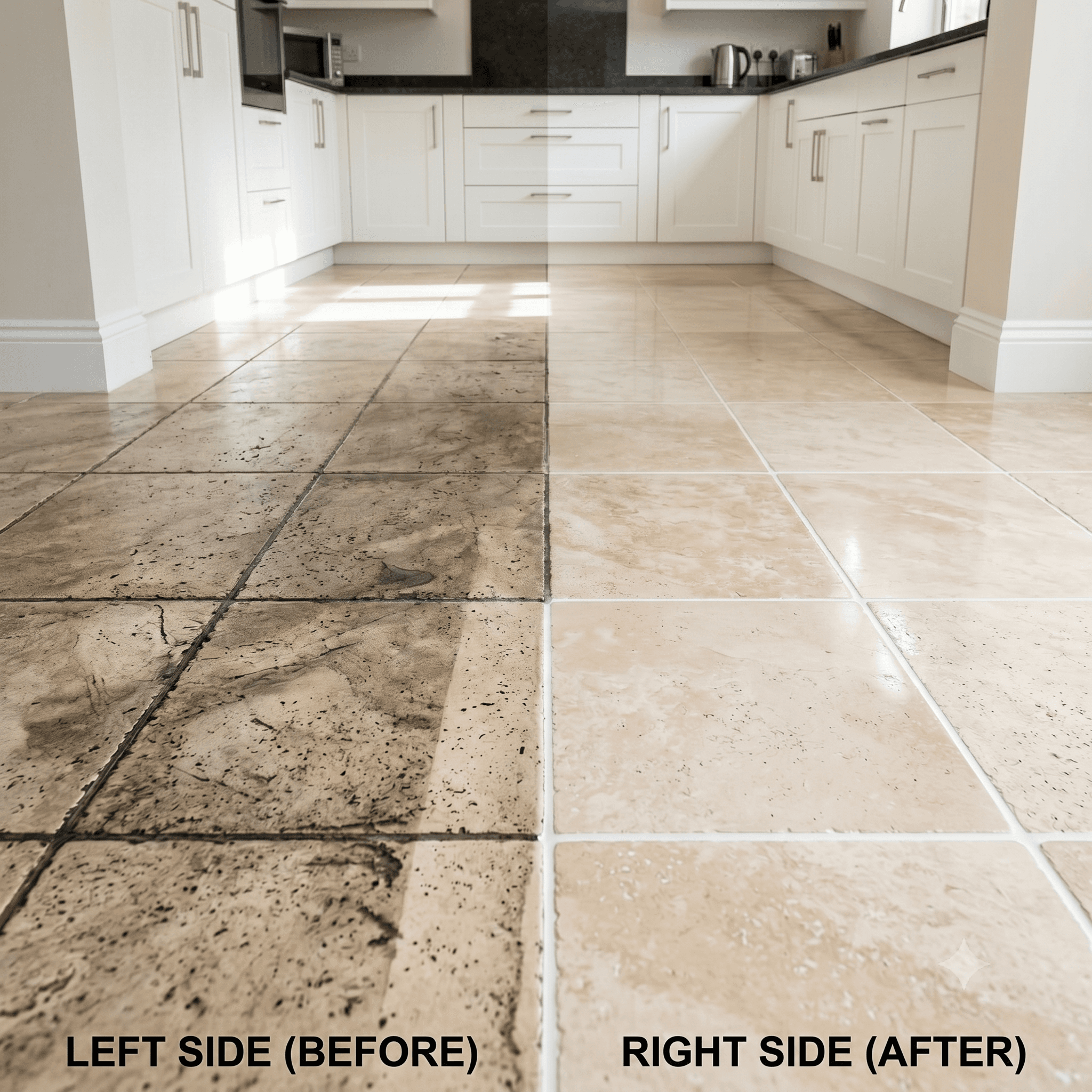
Dirty grout does more than ruin the look of your floors. Learn how porous grout traps mold, bacteria, and allergens, and how professional extraction restores your home's air quality.
Read Guide
Simple carpet shampooing often makes pet urine odors worse. Here is how deep sub-surface extraction neutralizes urine crystals at the source.
Read Guide